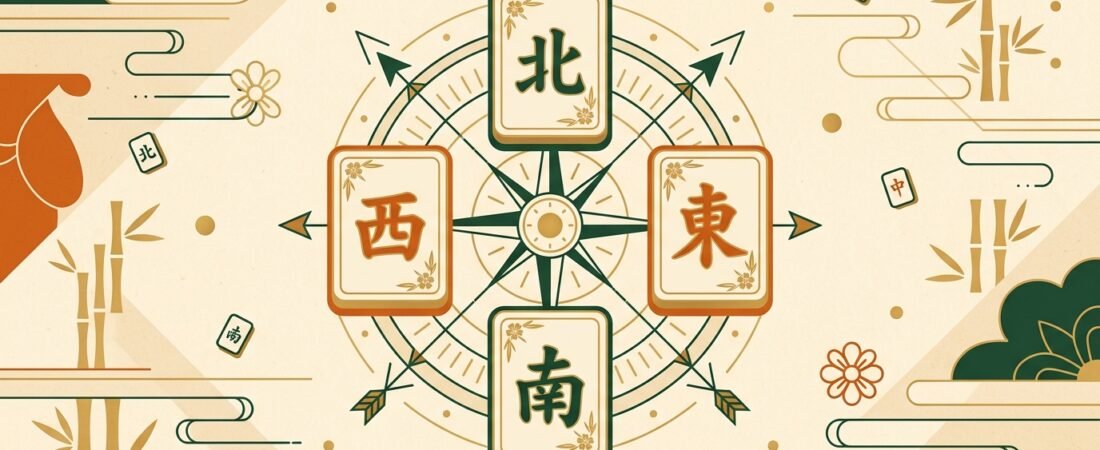
Four of the most distinctive tiles in a mahjong set are the Winds: East, South, West, and North. They appear in every layout, four copies of each, and they carry more cultural weight than any suit tile. This guide explains what each Wind looks like, what it symbolizes, and how to handle them in play. For the broader tile reference, see our Mahjong Tiles Meaning guide.
The Four Wind Tiles
- East (Dong) – the most important Wind in traditional play. It is the dealer’s wind and the direction play begins.
- South (Nan) – the next seat in the traditional turn order after East.
- West (Xi) – the third seat.
- North (Bei) – the fourth and final seat.
Meaning and Symbolism
The four Winds map to the four compass directions, which in Chinese tradition also carry seasonal and elemental associations: East with spring and wood, South with summer and fire, West with autumn and metal, North with winter and water. None of this matters for the matching rule in solitaire, but it is part of why the tiles feel meaningful rather than arbitrary.
Matching Winds in Solitaire
Each Wind has four copies on the board, and a Wind only matches another copy of the same Wind. An East matches an East; an East never matches a South. Because the Wind characters are bold and easy to recognize, they are usually the easiest matches to spot when the board gets crowded.
Frequently Asked Questions
Why are there four Winds?
They represent the four compass directions, which in the table game also mark the four player seats.
Do different Winds match each other?
No. Each Wind matches only its own kind. Four Easts, four Souths, and so on.
Want to spot Winds fast? Open the Classic layout and train your eye on the bold character tiles.