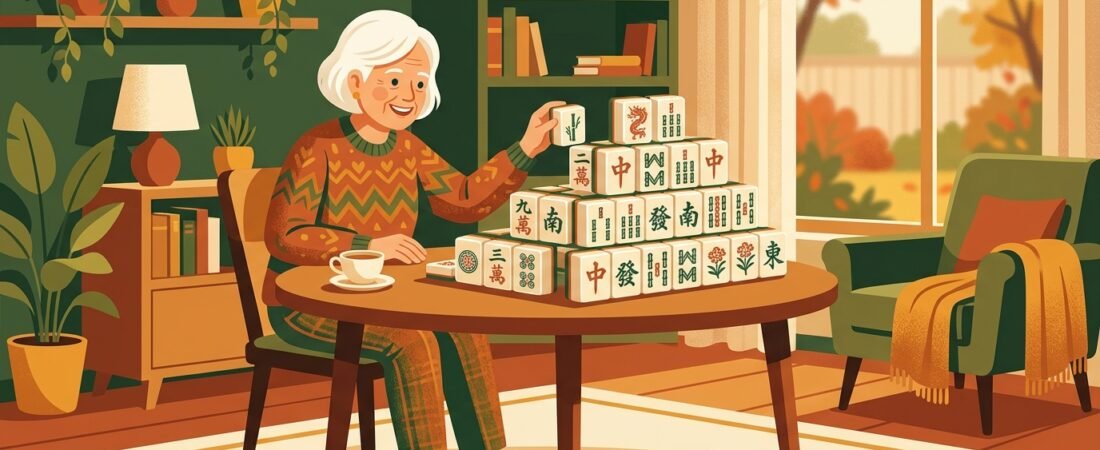
Mahjong Solitaire passt besonders gut zu älteren Spielern. Es ist ruhig, auf Wunsch ohne Zeitlimit, angenehm für die Augen und hält den Geist ohne Druck beschäftigt. Dieser Leitfaden behandelt die einfachsten Layouts für Senioren, wie Sie den Bildschirm für komfortables Spielen einrichten, Hinweise zu den Vorteilen fürs Gehirn und warum das Spiel so gut zu einem entspannten Tempo passt. Wenn Sie neu sind, beginnen Sie mit dem flachen Klassik-Layout und lassen Sie sich Zeit.
Warum Senioren Mahjong Solitaire mögen
Anders als bei Actionspielen gibt es keinen Countdown, keine Gegner, keine Hektik. Pausieren Sie, wann immer Sie möchten: Stehen Sie auf, um Tee zu kochen, kommen Sie eine Stunde später zurück, und das Spielfeld ist genau so, wie Sie es verlassen haben. Die Regel des Paarsuchens ist einfach genug, um sie in zwei Minuten zu lernen, bleibt aber jahrelang interessant – ein großer Grund, warum ältere Erwachsene dieses Spiel seit den 1990er-Jahren lieben. Es gibt keine Strafe fürs langsame Spielen, und Ihre Bestzeit ist nur ein persönlicher Rekord, kein Wettkampf, es sei denn, Sie möchten das.
Die einfachsten Layouts für ältere Spieler
- Klassik — flach und offen, jeder Spielstein von Anfang an sichtbar. Am wenigsten anstrengend für die Augen und der sanfteste Einstieg ins Spiel.
- Schildkröte — die Standardform, ausgewogen und fair. Ein gutes zweites Layout, sobald Sie sich mit dem Klassik-Layout wohlfühlen.
- Schmetterling — breit und flach, schnell geschafft auf einem kleineren Bildschirm. Ideal für kurze, befriedigende Runden, die sich nicht in die Länge ziehen.
Warten Sie mit hohen, tiefen Stapeln wie der Pyramide oder der Großen Mauer, bis Sie Sicherheit gewonnen haben. Sie verlangen ein genaueres Suchen und können einen neuen Spieler frustrieren. Der Leitfaden zu Layouts für Anfänger enthält eine ausführlichere Rangliste der Formen nach Schwierigkeitsgrad.
Bildschirm und Komfort einrichten
- Spielen Sie nach Möglichkeit auf einem Tablet oder Laptop statt auf dem Handy. Größerer Bildschirm, größere Steine, weniger Schielen, und das Spielfeld füllt das Display wunderbar aus.
- Wenn die Steine klein wirken, zoomen Sie im Browser hinein: Strg oder Cmd und die Plus-Taste. Das Spielfeld skaliert mit, ohne zu zerbrechen.
- Nutzen Sie die Hinweis-Taste ganz frei. Sie ist dafür da, das Spiel angenehm zu halten, nicht um rationiert zu werden. Es gibt keinen Preis dafür, den Hinweis nie zu benutzen.
- Machen Sie alle 15 bis 20 Minuten eine kurze Pause. Stehen Sie auf, schauen Sie kurz etwas in der Ferne an und kehren Sie erfrischt zurück.
Kognitive Vorteile
Die Forschung zu Rätseln und Altern legt nahe, dass Spiele wie Mahjong Solitaire das visuelle Scannen, die Mustererkennung und die Kurzzeitplanung trainieren – allesamt wertvolle kognitive Fähigkeiten. Entscheidend ist, dass das Spiel dies in entspanntem Tempo tut, ohne Stress und ohne Uhr. Anders als getaktete Gehirntraining-Apps, die sich wie Hausaufgaben anfühlen können, ist Mahjong Solitaire etwas, das man wirklich gern tut – und deshalb bleibt man viel eher langfristig dabei.
Fragen, die Menschen wirklich stellen
Ist Mahjong Solitaire gut fürs Gehirn? Ja. Es trainiert visuelles Scannen, Mustererkennung und Kurzzeitplanung – alles in entspanntem Tempo, ohne Stress und ohne Uhr.
Muss ich gegen die Uhr spielen? Nein. Ihre Bestzeit ist nur ein persönlicher Rekord. Es gibt keinen Countdown und keine Strafe fürs langsame Spielen. Die Uhr ist völlig optional.
Bereit anzufangen? Das flache, gut lesbare Klassik-Layout ist der sanfteste Einstieg. Lassen Sie sich Zeit und genießen Sie das Spiel.
Häufig gestellte Fragen
Ist Mahjong Solitaire gut für die Gesundheit des Gehirns?
Ja. Studien deuten darauf hin, dass regelmäßiges Rätsellösen hilft, die kognitiven Funktionen zu erhalten. Das Zuordnen von Mustern, das räumliche Denken und die Planung in Mahjong Solitaire trainieren mehrere Hirnregionen.
Welche Layouts sind für Senioren am einfachsten?
Die Layouts Schildkröte und Klassik haben große, gut verteilte Steine und einen klaren visuellen Kontrast. Vermeiden Sie hoch gestapelte Layouts wie die Pyramide, bis Sie sich sicher fühlen.
Kann ich die Spielsteine vergrößern?
Ja. Nutzen Sie den Browser-Zoom (Strg/Cmd + Plus) oder spielen Sie auf einem Tablet oder Desktop-Monitor für größere, leichter lesbare Steine.