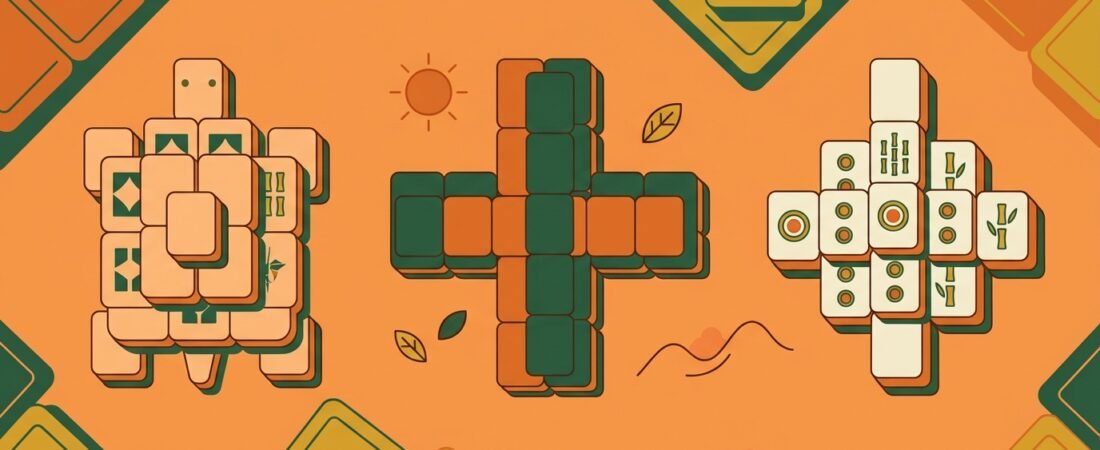
Best Mahjong Layouts for Beginners

Picking the right first layout is the difference between loving mahjong solitaire and quitting after one confusing game. This guide explains what makes a layout beginner-friendly, ranks the five best shapes to start on, and names the ones to avoid until you’ve practiced more. For the rules underneath every layout, the Rules guide has them.

What makes a layout beginner-friendly

Three things. One, a flat or shallow shape—tiles visible, not buried five layers deep. Two, balanced difficulty: enough pairs open that you rarely stall early. Three, recognizable structure: a shape you can scan in one sweep of the eye (turtle, butterfly), not an irregular blob.

Top 5 beginner layouts

  1. Turtle — the world’s most-played layout, for a reason. Balanced, fair, the reference for every guide.
  2. Classic — flat and open, perfect for learning the tile set.
  3. Butterfly — wide and shallow, a game in five minutes.
  4. Cross — symmetrical and small, good for quick wins.
  5. Triangle — a simple shape that teaches stacking without overwhelming.

Layouts to avoid at first

Tall, deep shapes (Pyramid, Great Wall, Tower) punish new players. The tiles stack many layers high, so most of the board’s hidden at the start, and one wrong early match can lock the game. Save these for after you’ve cleared a Turtle and a Classic without touching Shuffle.

Questions people actually ask

Which layout should I play first?

The Turtle. Every beginner guide’s written around it, and it’s balanced enough that you’ll usually finish a game.

How many layouts are there total?

25-plus, seasonal designs included. Browse them all on the All Games page.

Ready? Start with the Turtle—the friendliest first game you can play.