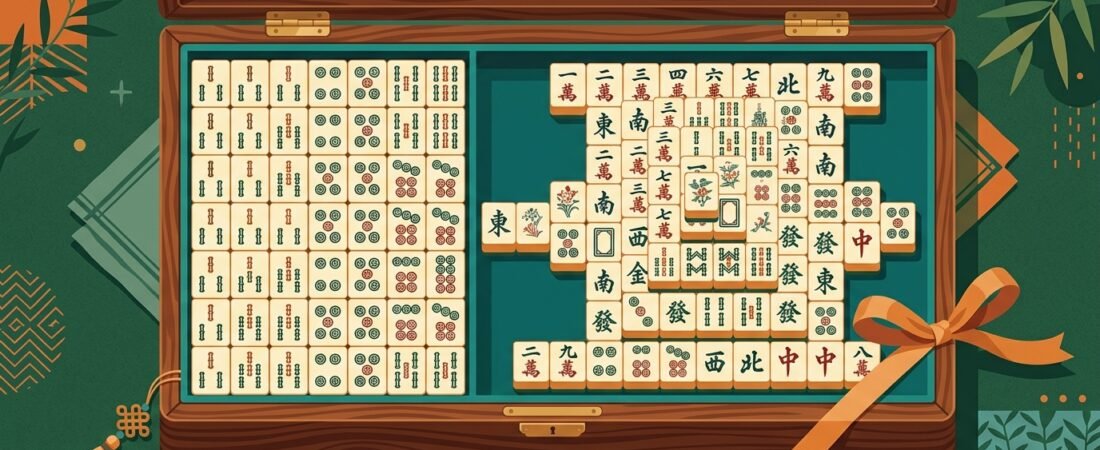
Buying your first mahjong set is fun, then immediately confusing. Tile counts run 136 to 148. Materials go from cheap plastic to heavy melamine to bamboo. Prices from twenty bucks to over three hundred. This guide tells you exactly what matters, so you end up with a set you’ll still be happy with in five years—whether it’s for home play, travel, or a gift.
How many tiles do you actually need?
A standard four-player set has either 136 tiles (Japanese Riichi, no Flowers or Seasons) or 144 (Chinese and American styles, with them). Some American sets push 148-plus with jokers and extras. If you’re buying mostly to feed a solitaire habit, 144 is what you want—every layout is built from those.
Tile size and readability
Size matters more than people expect. The common bands:
- Small (around 25 mm) — compact, cheap, but the engraved symbols are a squint for older eyes or anyone still learning the characters.
- Medium (30–33 mm) — the sweet spot. Big enough to read, small enough that the whole set fits a carryable case.
- Large (36 mm and up) — tournament size. Easy to read, satisfying in the hand, but the case gets heavy.
If anyone at the table is learning the symbols for the first time, lean medium or large. Squinting kills the mood.
Material: melamine, bamboo, resin
- Melamine — the modern default. Durable, scratch-resistant, colorfast, decent weight. Most mid-range sets are this.
- Bamboo and bone — traditional, gorgeous, what serious players reach for. Pricier, and a touch more fragile than melamine.
- Resin / acrylic — often clear or translucent. Stunning on a table, but cheaper ones feel light or plasticky.
- Plain plastic — cheap and cheerful. Fine for travel or a kid’s first set, but the symbols fade and the tiles sound hollow.
Case and accessories
A proper set should come with a sturdy case (soft fabric for travel, hard aluminum or wood for home), four racks, dice, and a wind indicator. Cheaper sets skip the racks and indicator—fine if you already own them, a hidden cost if you don’t.
Price: what to expect
- Under $30 — small plastic travel sets. Functional, not pretty.
- $30–70 — decent melamine in soft cases. The sweet spot for a first home set.
- $70–150 — quality melamine or entry bamboo, hard case, full accessories.
- $150 and up — bamboo-and-bone, premium engraving, wooden cases. Buy once you know you’re in it for years.
Questions people actually ask
How many tiles should a set have?
For Chinese or American play, 144. For Japanese Riichi, 136. For the solitaire puzzle—always 144.
Best tile size for a beginner?
Medium (30–33 mm) is the safe call. Symbols read clearly, and the set’s not a chore to carry.
Are expensive sets worth it?
Only once you’re sure you’ll play regularly. A mid-range melamine set feels and plays almost as well as premium bamboo, at a quarter of the price. Upgrade later.
Practice before you buy. Poke around our free online mahjong games, get comfortable with the tiles, then come back and pick a physical set with some confidence.
Note: this site may earn a commission from qualifying purchases made through shopping links we add to this guide later.
Frequently Asked Questions
What size mahjong set should beginners buy?
Standard 144-tile sets with tiles around 32-36mm are best for beginners. Larger tiles (38-42mm) are easier to read but heavier and more expensive.
What is the difference between Chinese and American sets?
Chinese sets have 144 tiles. American sets have 152-166 tiles including 8 jokers. American sets also include racks and a NMJL card.
How much should a good mahjong set cost?
A quality entry-level set costs $30-60. Premium sets with melamine or bone/bamboo tiles range from $80-200+. Avoid sub-$20 plastic sets.